
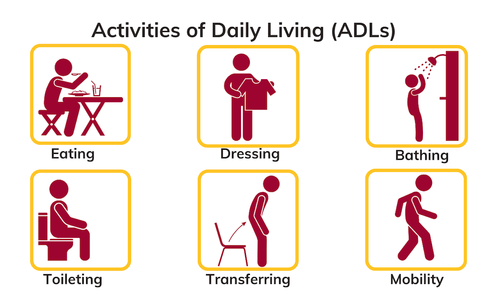
This training session focused on the Arizona Administrative Code’s definition of Activities of Daily Living (ADLs) and how caregivers can support residents — especially those living with dementia — in a way that promotes dignity, independence, and comfort.

Learnings
1. Activities of Daily Living (ADLs)
- Six primary ADLs: eating, bathing, dressing, toileting, continence, and transferring.
- Dementia impacts the ability to perform these tasks (e.g., forgetting how to use everyday items).
- Routines, simplicity, and familiarity help residents succeed.
2. Environmental Sensitivity
- Residents with dementia are highly sensitive to cold, clutter, noise, and lack of privacy.
- Calm tones, step-by-step explanations, and simplified surroundings reduce stress.
3. Care Techniques
- Use hand-over-hand guidance to encourage participation.
- Maintain modesty during bathing with towels or robes.
- Organize supplies in advance to streamline grooming and dressing.
4. Toileting & Incontinence Management
- Watch for non-verbal cues (restlessness, facial expressions).
- Establish consistent toileting schedules.
- Use properly fitting briefs and respond to accidents respectfully and without judgment.
5. Mealtime Assistance
- Adapt food options with finger foods, soft textures, or cut portions.
- Use adaptive utensils like large-handled forks and rimmed plates.
- Limit choices to one or two options and provide visual cues.
- Minimize distractions by reducing clutter and background noise.
6. Mobility & Physical Independence
- Incorporate movement into routines (walking to meals, folding laundry, stretching).
- Use cueing and demonstration to model safe mobility.
- Avoid over-helping; allow residents to do as much as they safely can.
Key Takeaways
- ADLs are central to dignity and independence. Each task is an opportunity for connection, not just a checklist item.
- Consistency is calming. Routines and familiar items ease anxiety and confusion.
- Independence is possible with support. Guiding, rather than taking over, builds confidence and ability.
- Movement matters. Daily mobility reduces stiffness, prevents falls, and supports overall well-being.
- Caregivers make the difference. Patience, empathy, and skill turn daily tasks into moments of dignity and care.


Leave a Reply